Skip to content Skip to footer

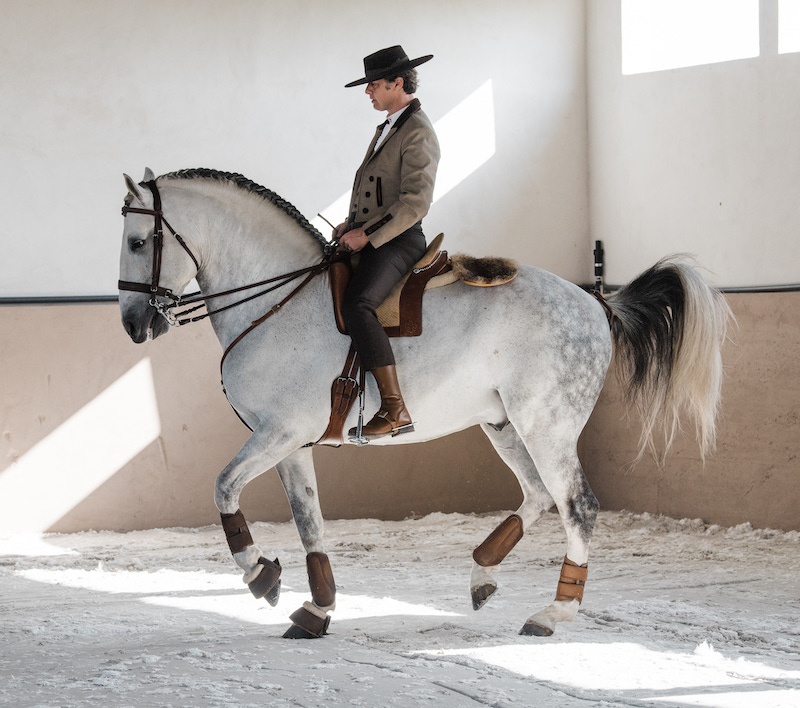
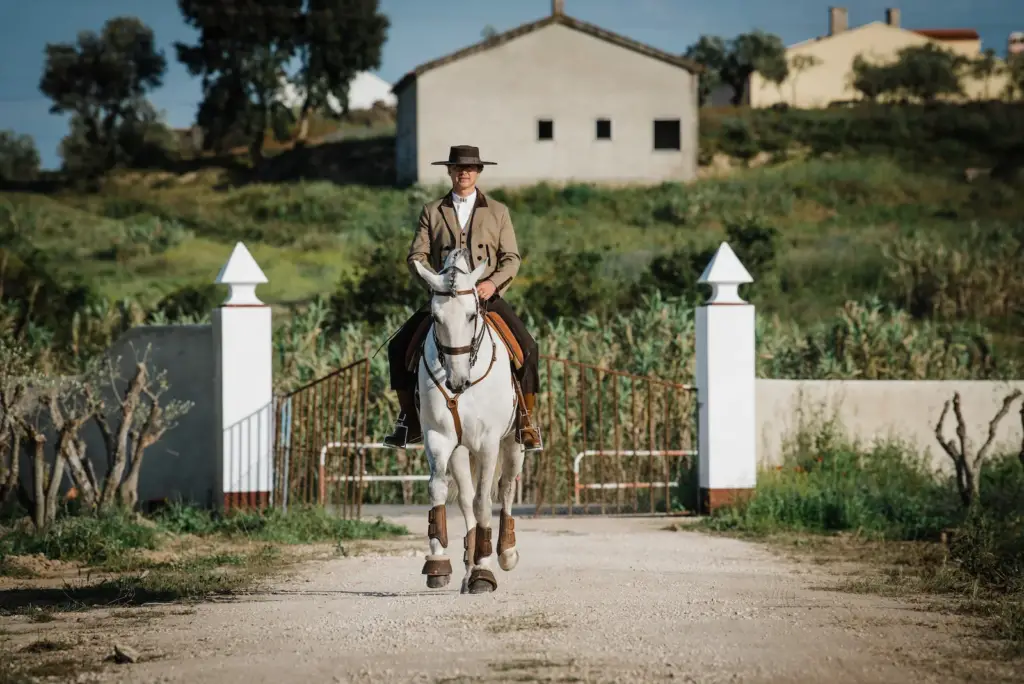
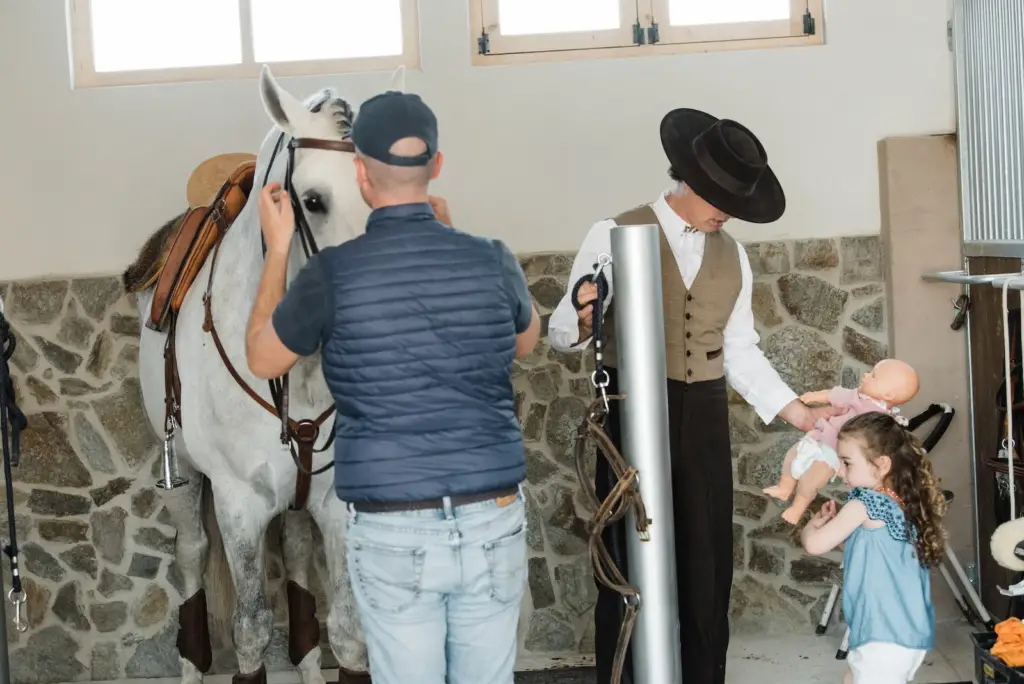
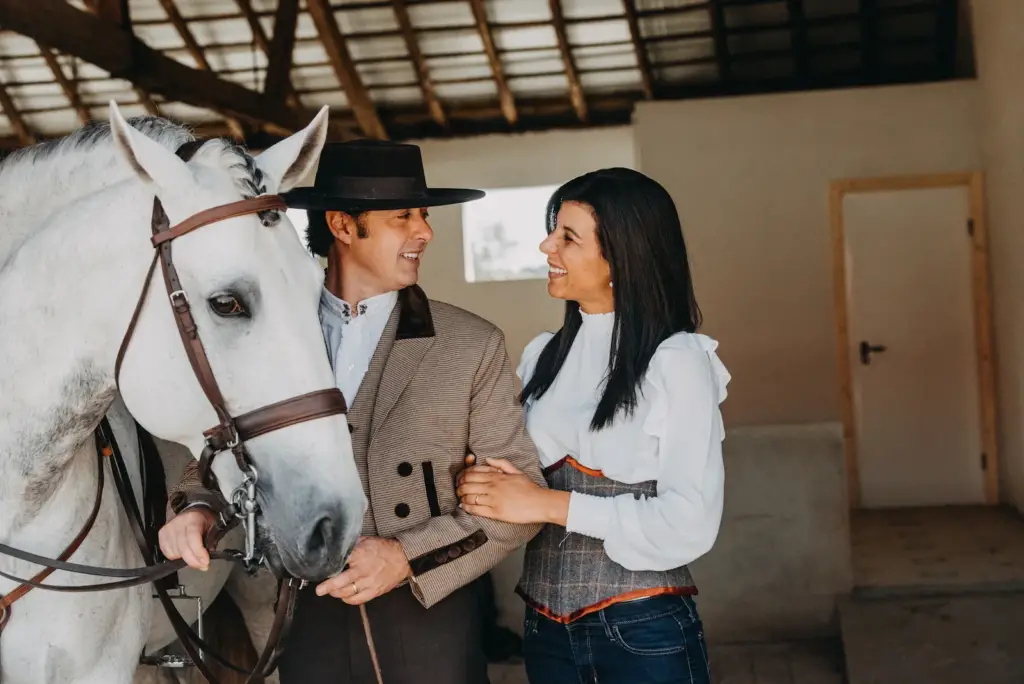
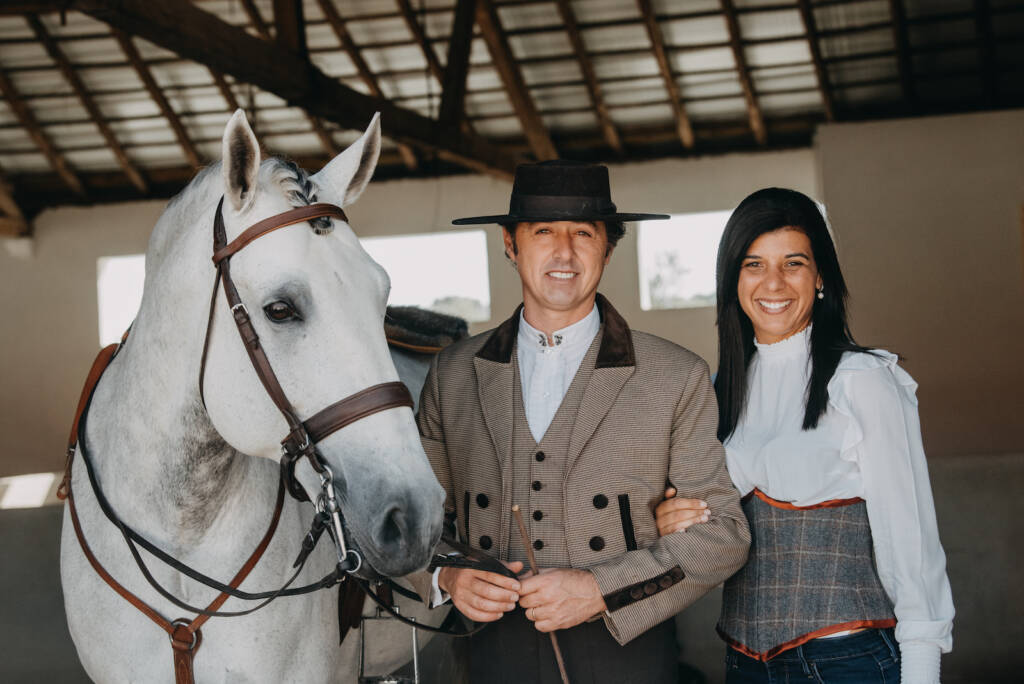
GGoncalo Nuno da Fonseca Linhas and Nara Franca are a husband & wife team devoted to Lusitanos. They both enjoy their life long love of the breed. Together they have formed a fabulous equestrian centre Quinta do Palhao, where Goncalo trains horses and riders in classical equitation. Nara an Equine vet specialising in reproduction has a small breeding herd at their farm with the stud brand Coudelaria Quinta do Palhão

Goncalo Nuno da Fonseca Linhas

Captivated from a Young Age


Goncalo Nuno da Fonseca Linhas

T“I confess that although there was always stages in my early life when I had to prioritise studies over horses, it was not always easy because whenever I could, I would escape to my Grandfather’s farm to be with them, that was where my heart was. It was my Grandfather who introduced me to riding when I was very young. I have never looked back.

I remember watching videos of Master Nuno de Oliveira, they were really an inspiration for me. The way he rode, the lightness and grace with which the horses performed the exercises, all of this fascinated me.

Unfortunately, I did not have the privilege of meeting Master Oliveira in person. But one day my grandfather said he was going to take me to a place where horse riding was practiced in the way which I identified. That was the day I met Master Luis Valença. My passion was confirmed. It was with Luis Valença that I learnt classical equitation greatly improving my knowledge and developed deeper my understanding of classical principles. Today I am truly fortunate to be able to share ideas and work alongside such a master”.

Goncalo joined the Valenca Team Riders in their Royal Horse Gala and Appassionata Shows from 1996. He was one of Luis Valenca´s principal Proteges.

Started his Own Centre in 2009


In 2009 Goncalo opened his own classical training centre in Vila Cha de Ourique – he has ever since grown his centre with clients from Portugal and from all over the world.

In conversation with Goncalo I was curious to know more about his work and views on classical equitation.

He told me

“The most important aspect in classical riding as in any other type of riding, is above all knowing how to respect the horse”

“This is the advice I give to those who want to follow the equestrian path. My second piece of advice is find a recommended riding centre so they can improve their knowledge. Watch others train horses both from the ground and ridden. Be curious, be willing to obverse every detail, be humble.

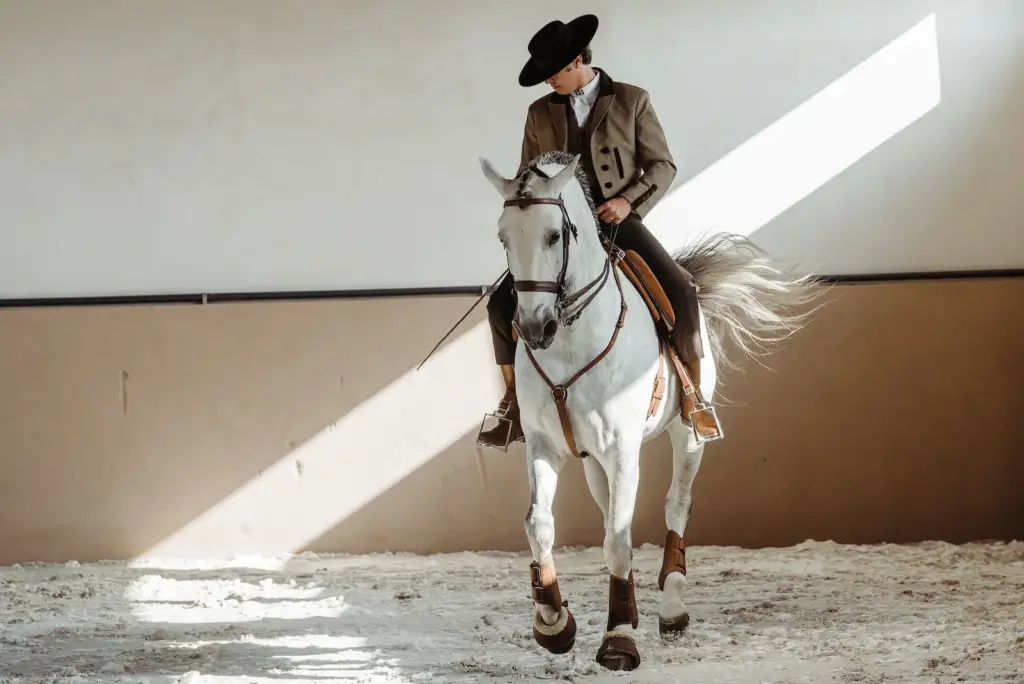
Goncalo is well known for teaching the piaffe in fact one could as far as

to say he has a true gift in teaching horses the piaffe.

The Piaffe


Image by Lena Saugen

Goncalo can you tell me how you approach this exercise.

This is a very complex topic because it can have so many different interpretations trainer to trainer, country to country, horse to horse. Riding is an art the complexity and simplicity spans from the moment you meet the horse to performing first ridden steps to more complex exercises such as the piaffe. Everything should be performed with calmness and sensitivity.


In my work I begin by concentrating the horse´s gymnastic ability I am looking for them to demonstrate signs that they are physically able to start. It is up to the rider to know whether or not the horse is prepared for it and the time to which he positively submits to it.

I look for signs that the horse has the ability to demonstrate flexibility in the hindquarters then see if they can lower the hips and this will lead to a lightening in the contact. I only ask the horse to achieve 3 or 4 piaffe steps. This is enough I am not looking to push this by doing 3 or 4 minutes of the same. Tiny steps and reward is enough.

I always begin the piaffe from the ground using a cavesson and fixed side reins. I don’t like to go straight to the reins, because it’s very likely that horses will want to resist, sometimes retreating, sometimes forcing us to release them.

With the cavesson nothing can interfere with the horse’s contact, so he remains comfortable. Also, if any unwanted reaction appear, it is easier to correct without any risk to horse and rider. As they become familiar to the piaffe in hand, performing it with a rider (in rare cases and exceptions) they will easily achieve it.

What comes first piaffe or passage?

Personally I think it is more important to start with the piaffe before the passage, because a collected horse will have a more perfect passage. A swinging collected trot with the horse taking the weight onto his hindquarters and carrying more weight on his hind legs gives the horse the power that he needs to lift himself into the passage. By this I don’t mean that there are no exceptions to starting with the passage first, but there are several possibilities that when we get to the piaffe the diagonalisation is sometimes not so perfect.
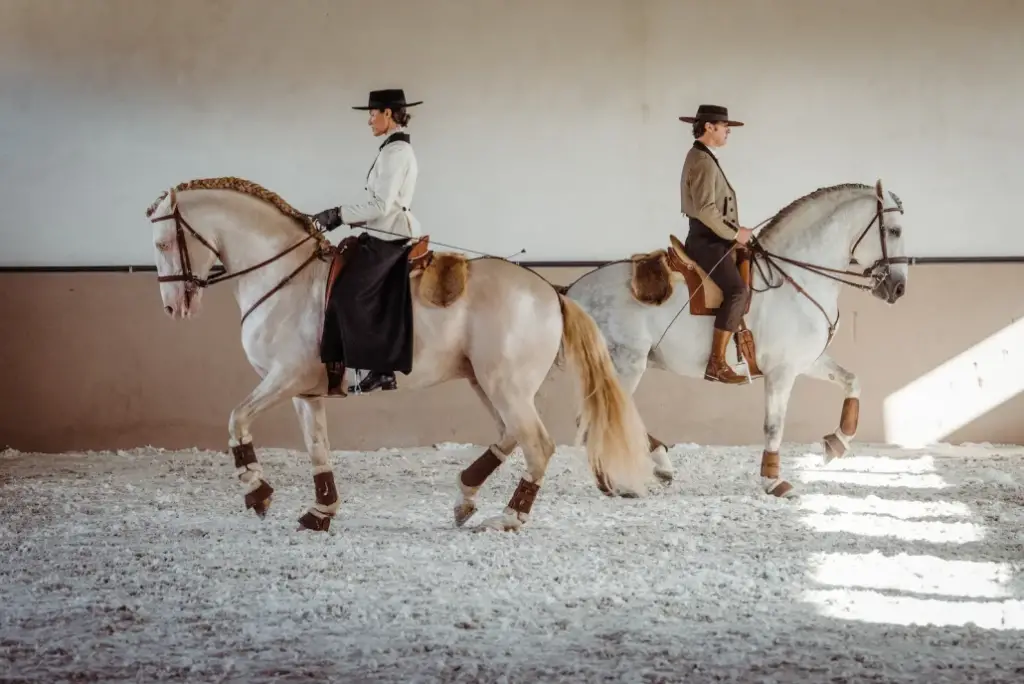
In 1996 Goncalo joined the Valenca Team Riders in their Royal Horse Gala and Appassionata

“The shows are truly a fantastic reward for the time we spend teaching a horse, the conformation of the dynamic partnership we have developed. Walking calmly into an arena and perform high school movements to sometimes 20,000 people in the audience. The conformation of all you have done is such an amazing feeling.
I can honestly say I grew a lot as a horseman when doing shows because sometimes the unforeseen happens. Having to manage all these obstacles on the spur of a moment, gave me the skill of remaining calm, to be a more accurate and automatic resolution power.

Have there been any particular horses that have inspired you or change you in any way?

“They are all special, I owe them everything I am today. I am just so grateful for each and everyone in my life. Every horse counts there are easy ones and difficult ones, each one is a teacher in their own way. Especially the more complicated horses they ask us to search in ourselves for solution and to listen more, we learn the most from those that ask us to be humble and think, for these reasons they are special”.

What breed do you like the most?

For me, without a doubt, the Lusitano. For its versatility. A horse that has managed to reach the level in all disciplines. It is very gratifying to see our Lusitanian horse spread all over the world, not only delighting amateur riders but professionals too. They are inspiring so many people.

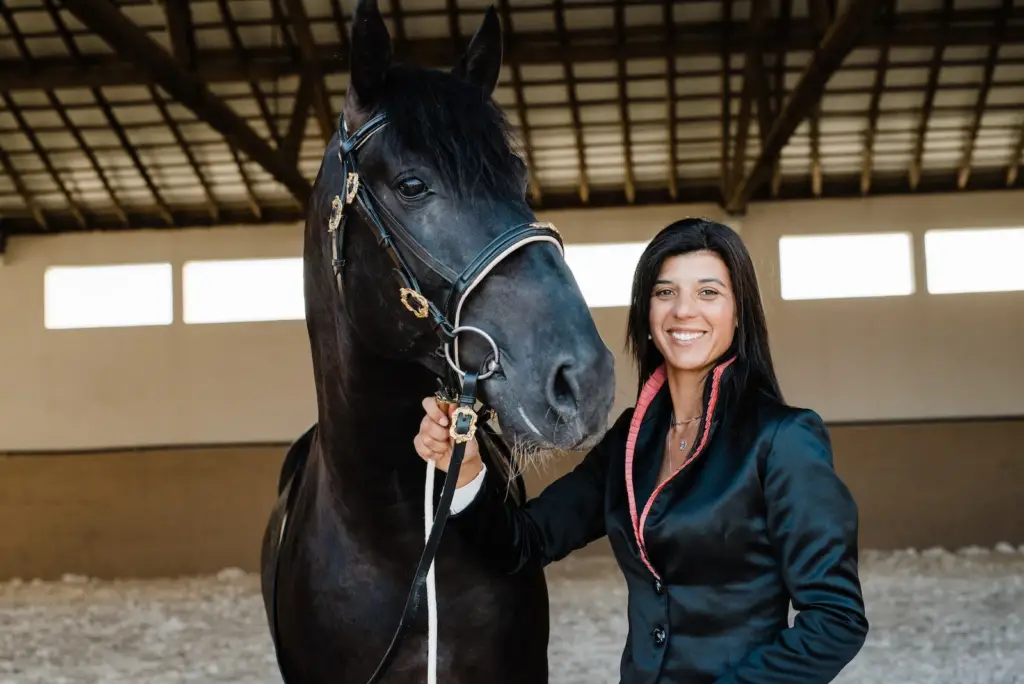
Nara França

Nara´s tell us how you got involved in Lusitano Horses.

My parent’s house was near a Picadeiro, and I was always there because I enjoyed being around horses. I started show jumping in a very amateur level.

My contact with horses was very homeopathic but constant.  In University I studied general veterinary I had the opportunity to train for one year abroad and there I fell in love with the reproduction in horses. I decided that I would do that for a living. After several internships and work placements.

I finished my masters in 2011 and my thesis was about embryo transfer. My main work in horses is related to reproduction: artificial insemination, collection and process of semen, neonatal care, embryo transfer etc, and the general clinical work as well.

So here we are today, I have the joy of being around horses almost every hour of my day.

You have established your own breeding programme. What are your goals in terms of type of Lusitanos you want to produce and with what focus and what bloodlines

I’m lucky enough to deal with many stallions and their descendants. In my breeding program I try to use stallions that I know will produce nice foals regarding character and functionality. I prefer the typical Lusitano with a nice temperament and versatility. My goal is to have a high-quality product, adaptable to the various disciplines, with good gaits and a typical morphology: keep the basis of the true Lusitano with a touch of modernity to reach higher levels that the actual market seeks for.

Our 4 mares are from either Navalheiro FC or Onda Braga lines. I am very careful to choose the right stallion for each mare. I have used Rubi Ar, Jasmim plus and Lord plus, Fogoso TVF, Don Juan de Cabecao, Vigario Menezes and this year I choosen Lotus da hermida and Miura do cais. I am very happy and excited with our foals. 

The stud brand is Coudelaria Quinta do Palhão so all the foals have the sufix “do Palhão” For example Ribamar do Palhão.

Goncalo and Nara Open Quinta da Palhão


In June 2022 Goncalo and Nara suceeded in completed to first stage of their beautiful new classical equestrain centre, Quinta do Palhão in Vila Chã De Ourique, Santarem Portugal.

It was a magical moment walking into a seemingly ordinary white barn to behold spectacular wooden beams in a spacious equestrian installation brightened by natural soft sunlight. The atmosphere is calm, harmonious, modern and very functional.