An Inspirational Father and Daughter Story
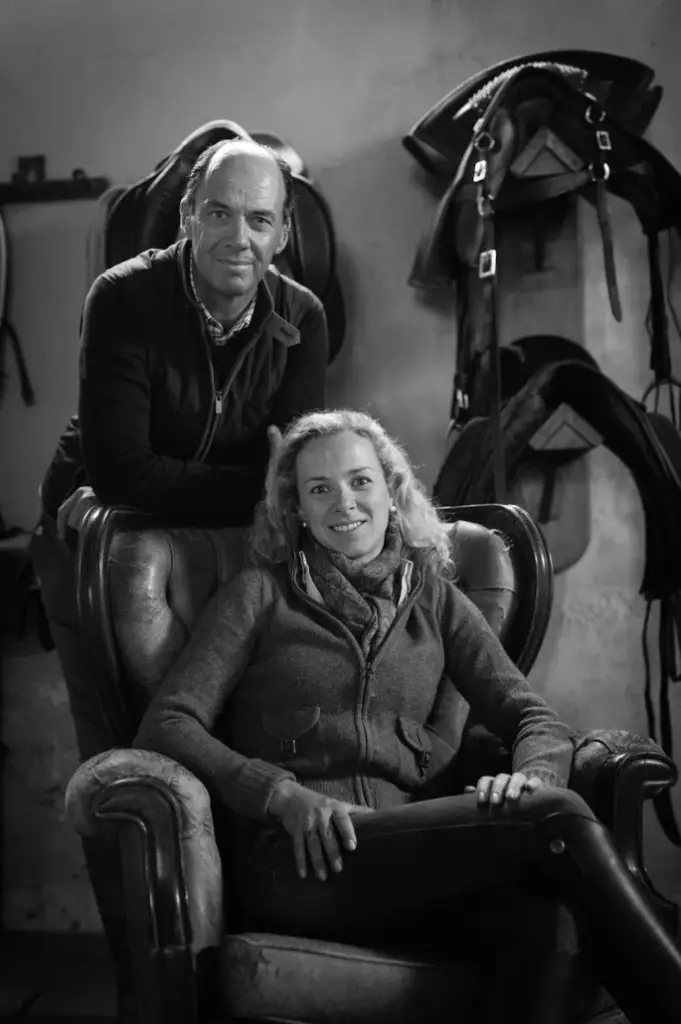
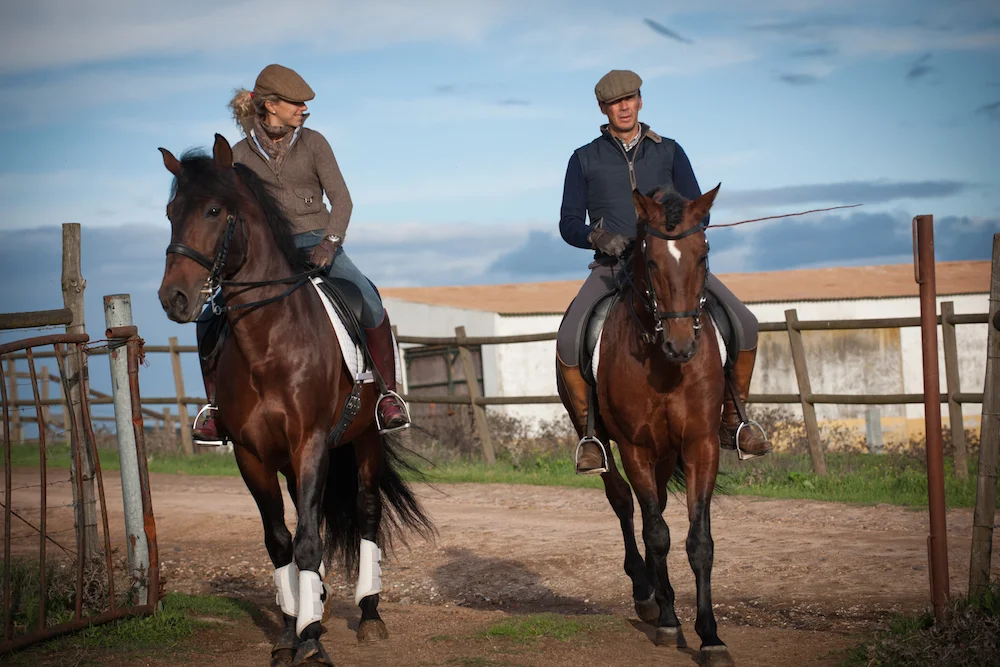
With the ‘hot topic’ debates about modern day competition dressage and classical dressage on so many lips I cannot think of a greater example of this in action than the dynamic duo of Paulo Caetano and his daughter Maria.
Two people who live and breathe traditional classical and modern day.
Recently I paid a visit to my friends Paulo and Maria to gain more insight into their lives.
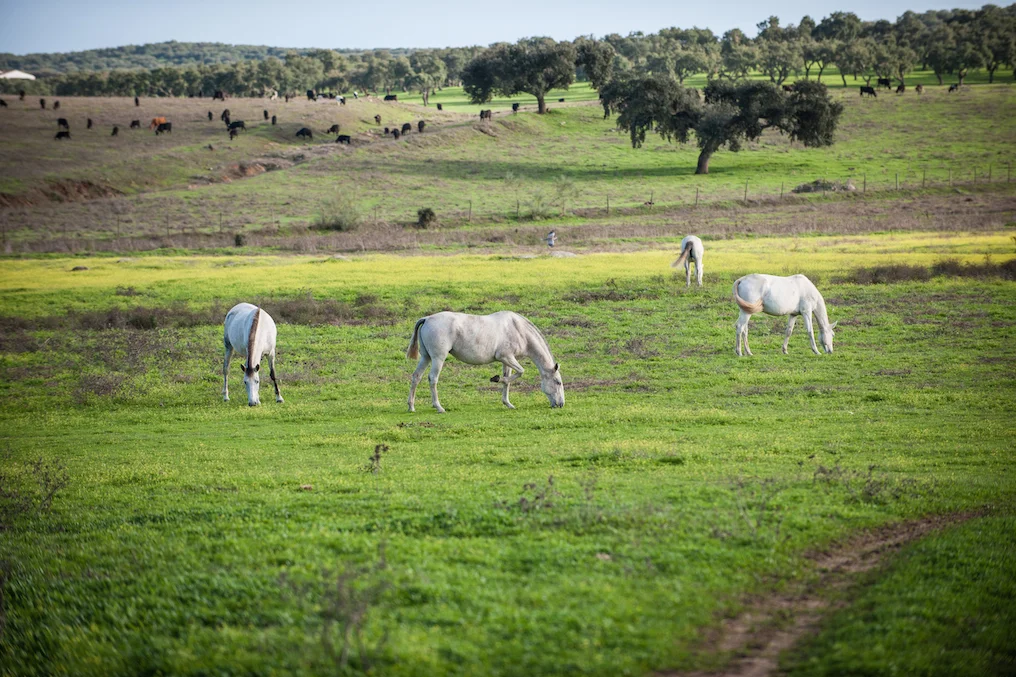
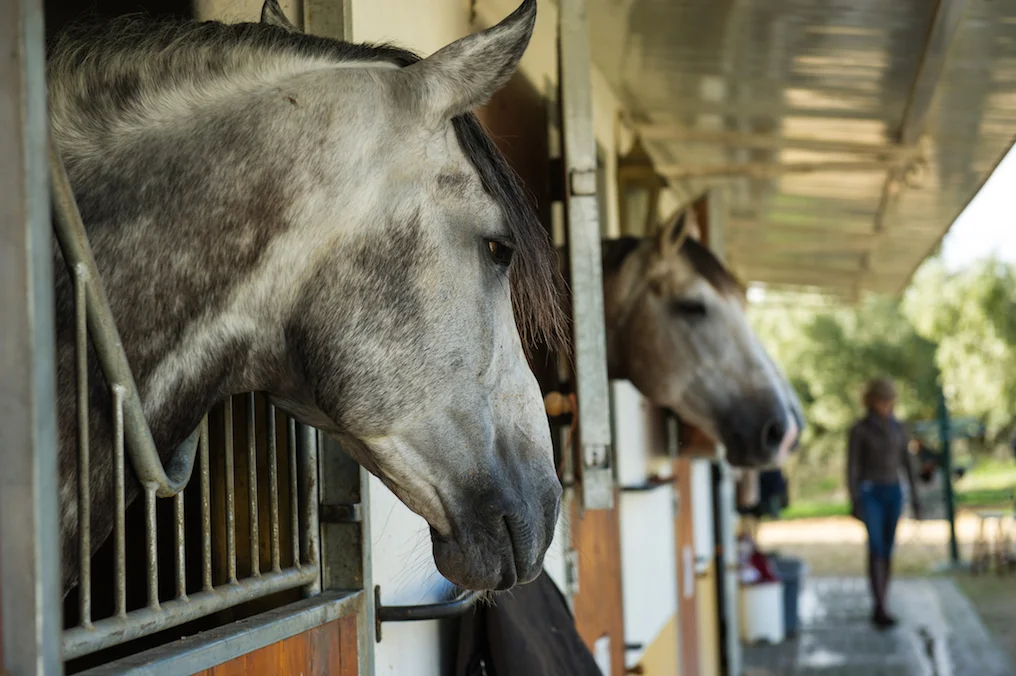
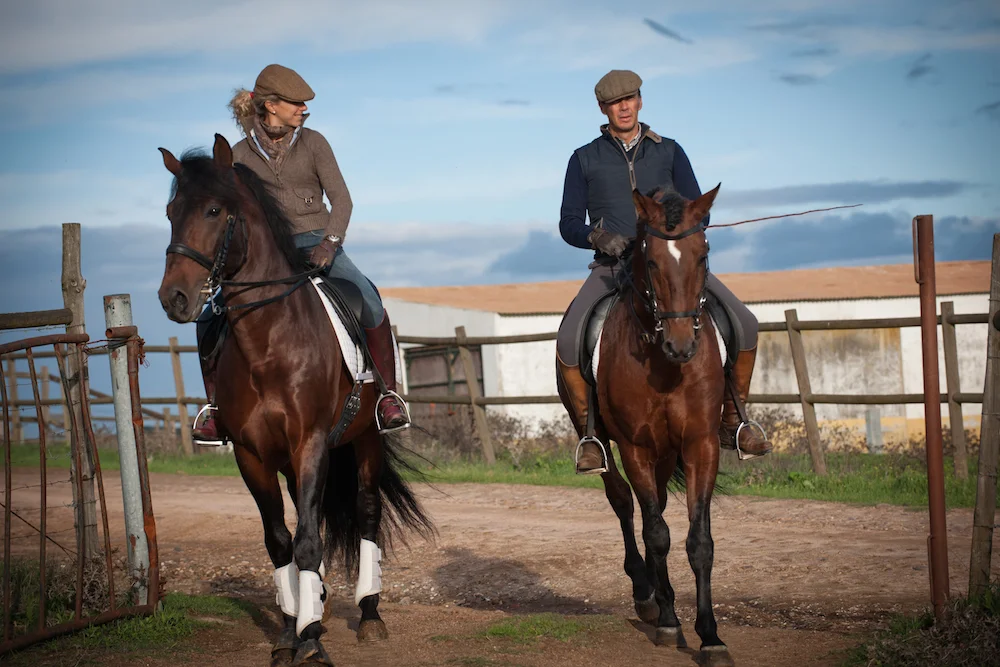
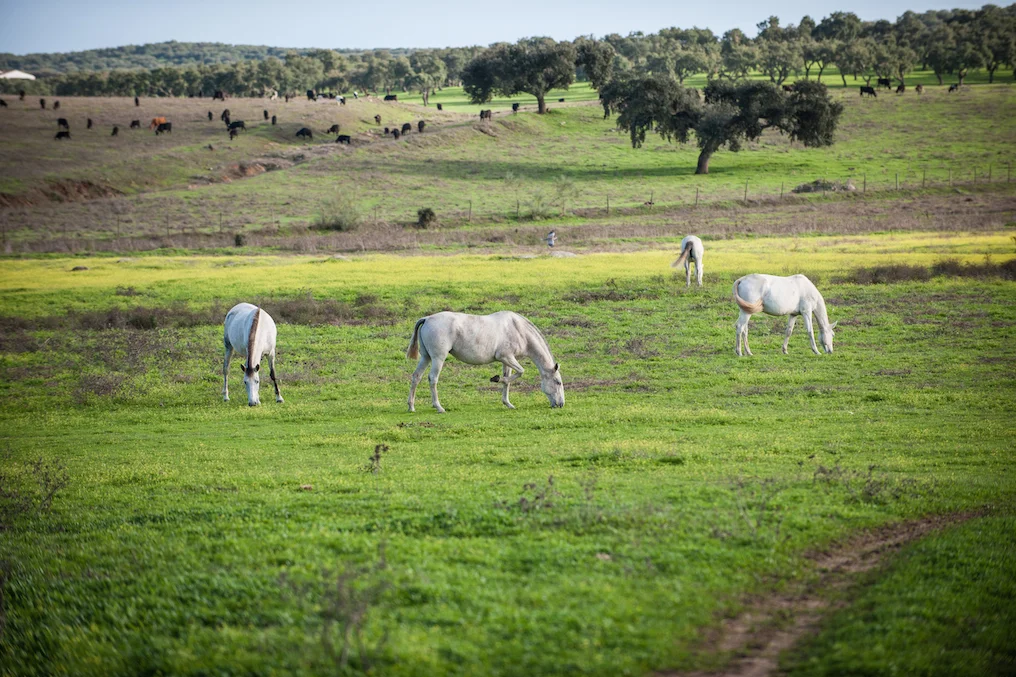
Their home is in the Alentejo, Portugal close to the Spanish border. A long drive takes you up to one of their stunning farms, where the Lusitano horses are bred and trained. The landscape is a timeless scene of rolling hills, lakes, clusters of trees, wild flowers and everywhere is teaming with bird life. Cattle and horses graze contentedly on the lush grass unusual for this time of year, but there has been more rain than normal. The drive winds it’s way to the farm, made up of a house, stables, indoor and outdoor arenas and a breeding facility situated in the middle of the expansive Alentejo views.
Alentejo arrival
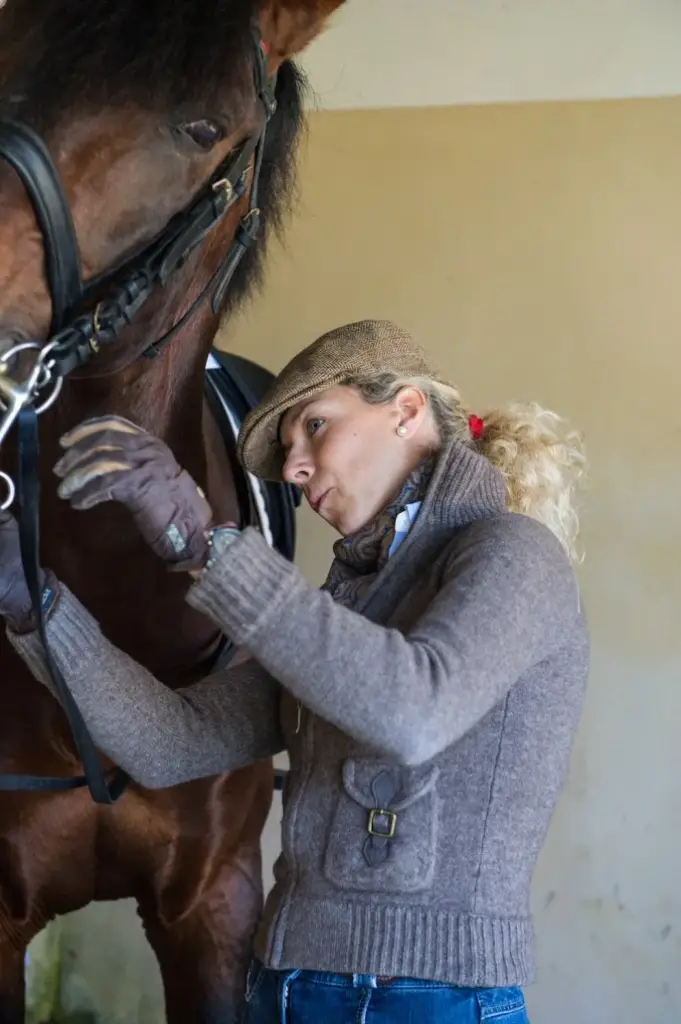
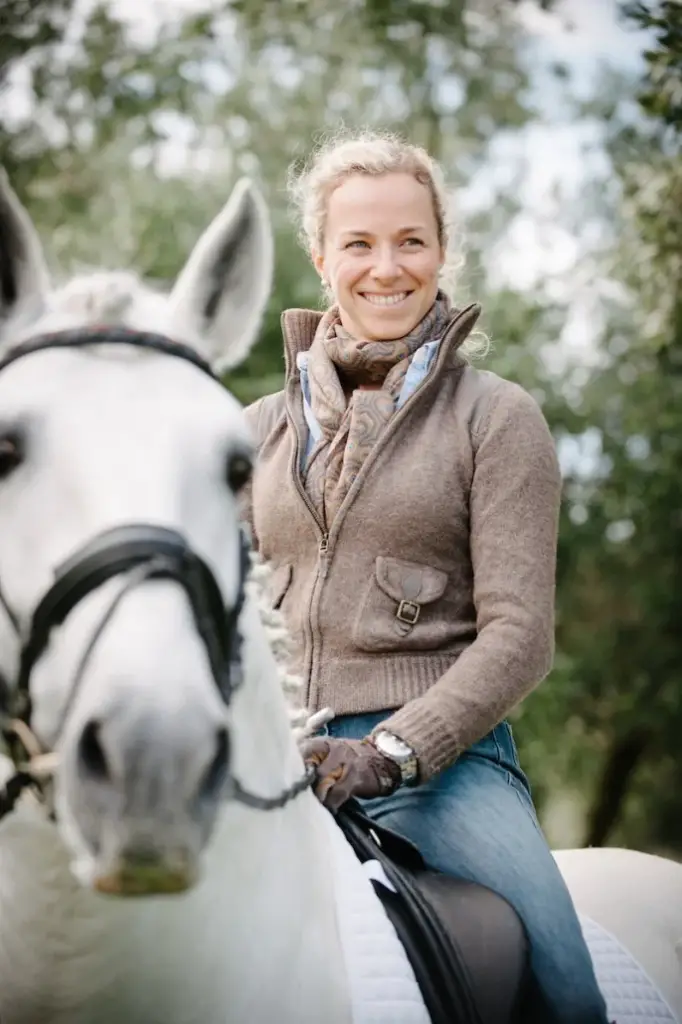
When Lena and I arrived we found Maria busy with her sponsors trying out new Bates saddles on her competition horses. I reflected it was only a few weeks before I saw her performing at the world equestrian games on her Lusitano stallion Xirpiti.
Trained by her father Maria is now one of Portugal’s leading stars in dressage competing Internationally.
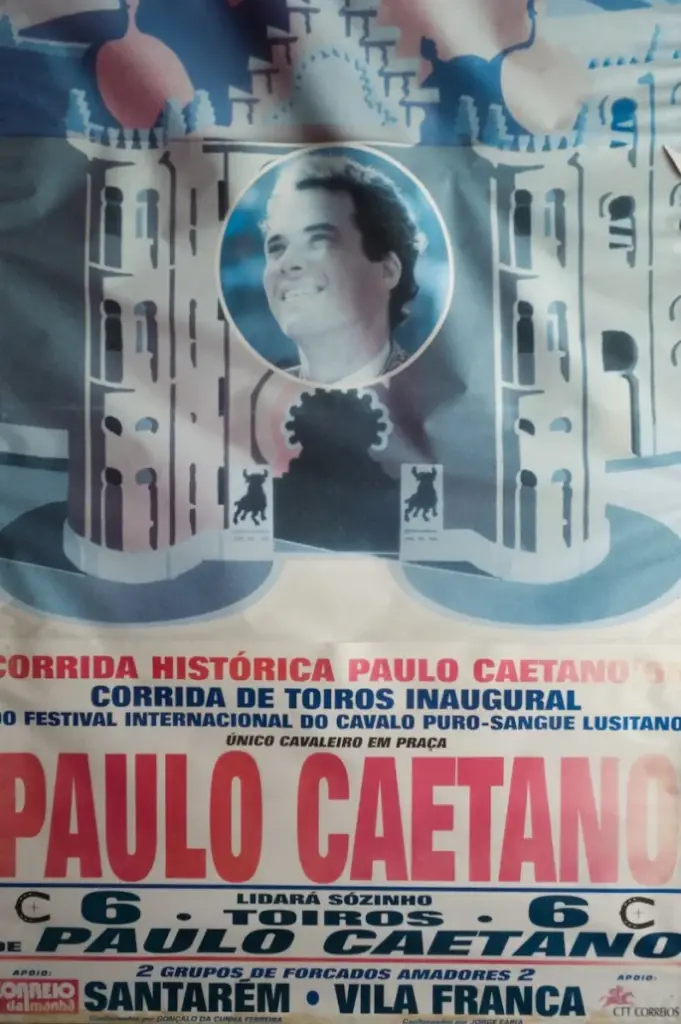
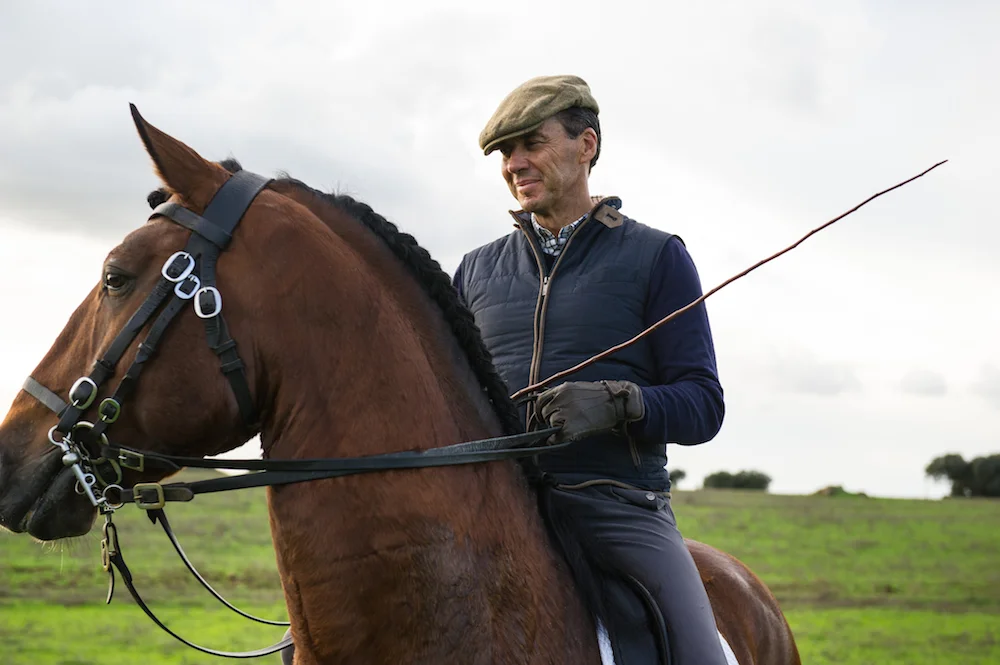
Paulo Caetano
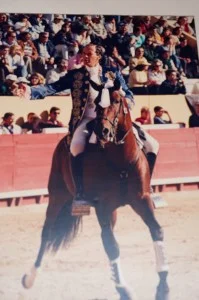
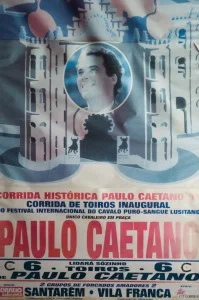
Paulo Caetano is a man of great style, a warm smile and engaging manner. He was also one of Portugal’s most well known bull fighters. This year (2014) two riders he trained competed this year in the World Equestrian games in Caen France – his daughter Maria and Manuel Veiga.
Paulo as I understand your family, landowners in Portugal. In 1972 when Portugal’s leader Salazar stepped down from power the army took over running the country in the form of a communist regimé, which lasted about 3 years. The Communists took away the rich manor homes, estates and vast farms from the wealthy to be divided between the people. As a result the banks collapsed and moved their business out of the country. Your family were among those affected.
Paulo can you tell us a bit about your family history, childhood and also why did you choose to ride in the bull fight?
Yes both my grandfathers were farmers in Ribatejo and Estremadura regions of Portugal breeding cattle and the black bulls. My father an entrepreneur, worked in Lisbon. He was an amazing business man and a fantastic father. He always respected my dreams to be a rider supporting my decision to become a bullfighter. I was the first person in my family to choose this career.
In 1973 during the Cravos Revolution like many I left Portugal, I went to Badajoz in Spain. There my bull fighting career rapidly developed.
I made many great supportive friends – I’ll always be very grateful to Moreno Pidal, Alvaro Domeq, Angel Peralta , Fermin Bohorquez, Manuel Vidrié and Jacinto Alcon, all are my true friends for life.
In 1978, when back in Portugal my father handed me the responsibility of managing the Esquilas Farm at Monforte, which is our family’s favourite place to this day.
Even with this new responsibility I continued my passion gaining a lot of success as professional bullfighter. The fights provided me with enough money to develop new agricultural and cattle businesses in our farms plus I bought more land. It was at this time I started breeding Lusitanos.
The Importance of Mentors
At the Monforte farm, my mentor was Antonio Moura. He was the expert in everything to do with agriculture and cattle. Antonio was the uncle of my college and competitor João Moura and father of the lovely Dita, my future wife. Meeting Dita has always stayed etched in my mind she used to drive a small scooter to the farm to watch me training. Every day she was in the manége, looking childlike, very quiet, unassuming, a bit shy, but gorgeous.
Two years later we were married and the year after my son João was born. Maria followed three years later. Dita and I have been extremely happily married now for thirty two years.
Paulo at what age did you start bull fighting?
I started riding horses at 4 years old and bullfighting professionally when I was 14.
What made you become a bullfighter?
I don’t know it’s a passion that has always been in me right from the start.
When I was thirteen I left school and met Antonio Badajoz, one of the most important bullfighting personalities of the time.
Although I was very shy I was determined, to say hello to him.
To my joy he answered: how are you? Immediately
I replied: I am Paulo Caetano and I want to be bullfighter.
Can you see me riding?
He laughed, said yes, let´s go.
Three months later I had my first bullfight contract at Campelos – Torres Vedras Portugal 1974.
Who trained you? You mentioned that you had classical training masters that changed you who are they ?
Yes indeed. Concerning my masters I had been a very lucky guy. Antonio Badajoz taught me all about bullfighting the art and rules. He also taught me all the secrets about wild bulls – the Important details about their reactions in the fields and in the arena.
When it comes to the horses and classical equitation my first master, from the age of 4 was my uncle Fernando Metzner Serra. He had German equestrian origins which he openly he shared with me. Then the ones who taught me the fundamentals of classical equitation were the teachings of Pluvinel, Robichon de la Guerinière and Baucher. For me they were the unquestionable masters. I gained all my basic principles from these men.
My uncle was good friends with the Master of Masters João Branco Nuncio. João Nuncio and Nuno de Oliveira are the most important classical Equestrian`s icons in Portugal.
I was very lucky to have the opportunity to go with my uncle Fernando to Vale de Lobos, Nuncio´s farm at Alcácer do Sal. I watched him riding fantastic horses like Ferrolho and Lord Mayor.
During the revolution, two good friends of my father, who lost their farms, came to live in Lisbon. The Viscount da Córte and his best friend and student João Parreira Cano,two very good classic dressage riders I trained with them everyday for 3 years in the classical method.
I’ve always had the desire to make sure I watched and ride with the great masters like Coronel João Martins Abrantes, João Lopes Aleixo and Francisco Cancela de Abreu. They are generous people that have been open and willing to share their knowledge.
All of them have given to me knowledge in different ways, but most of all, all imparted the importance of respect and love with the horse.
What do you remember most about your early training? Is there something that you always hold true now?
Yes. As I mentioned I have been blessed having the opportunity to have so many wise professors They gave me a good and solid base from which to build. Now, 40 years later, I can solve a problem thinking about one of them and their advice. But the most importantly I haven’t stop learning. I know everyday I can learn something new I like to think I am progressing I am not sure but I believe that I am getting better. Certainly each young horse that I start training reminds me : hey you , try to do less mistakes
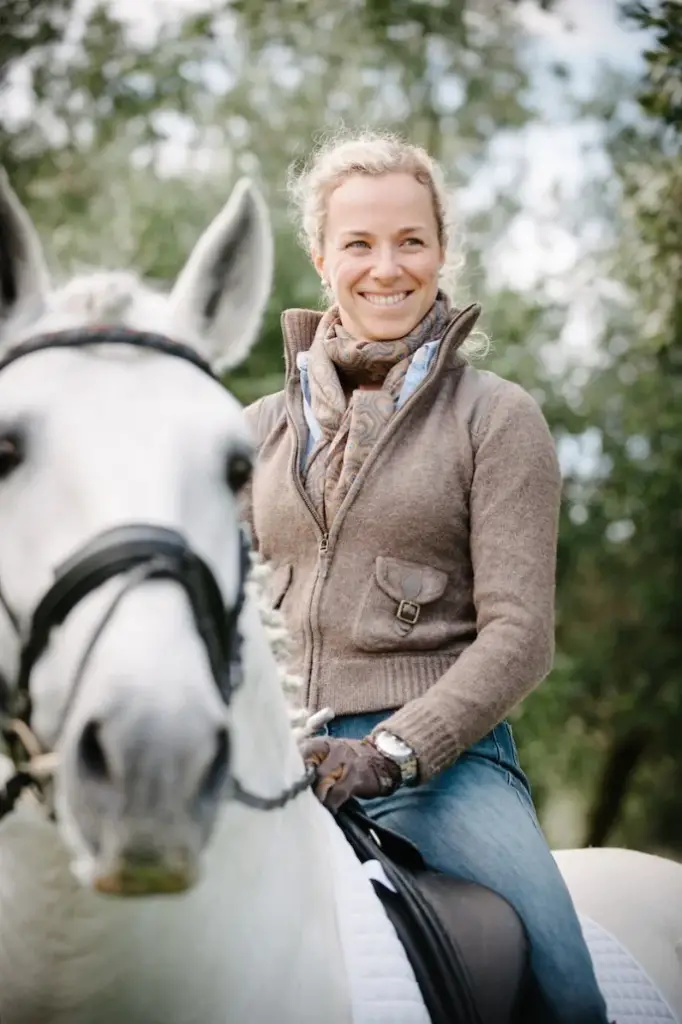
MARIA CAETANO
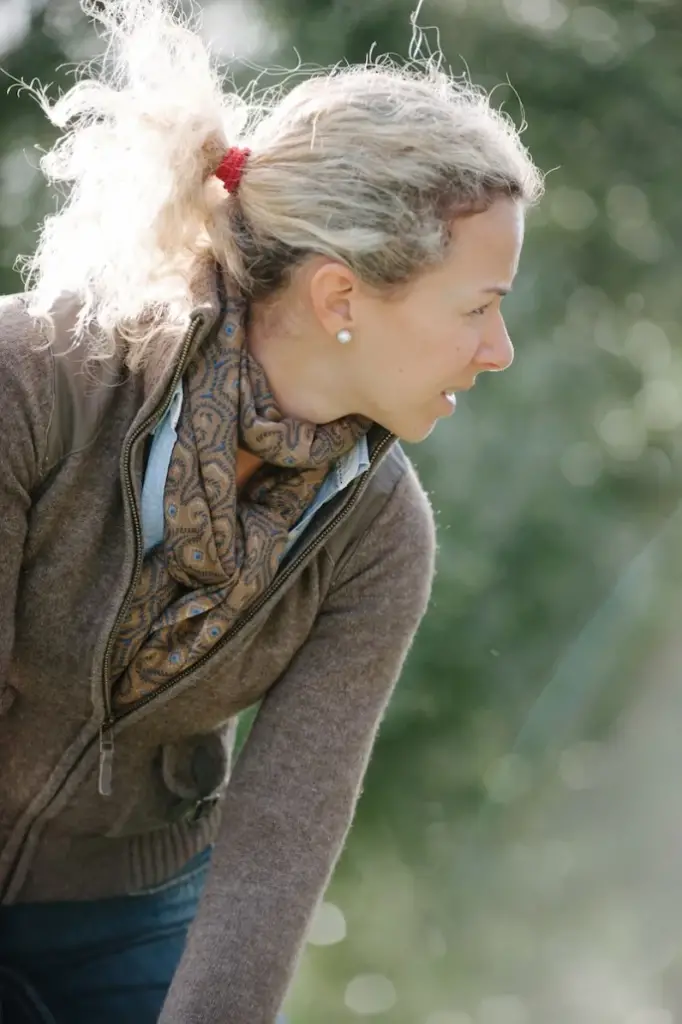
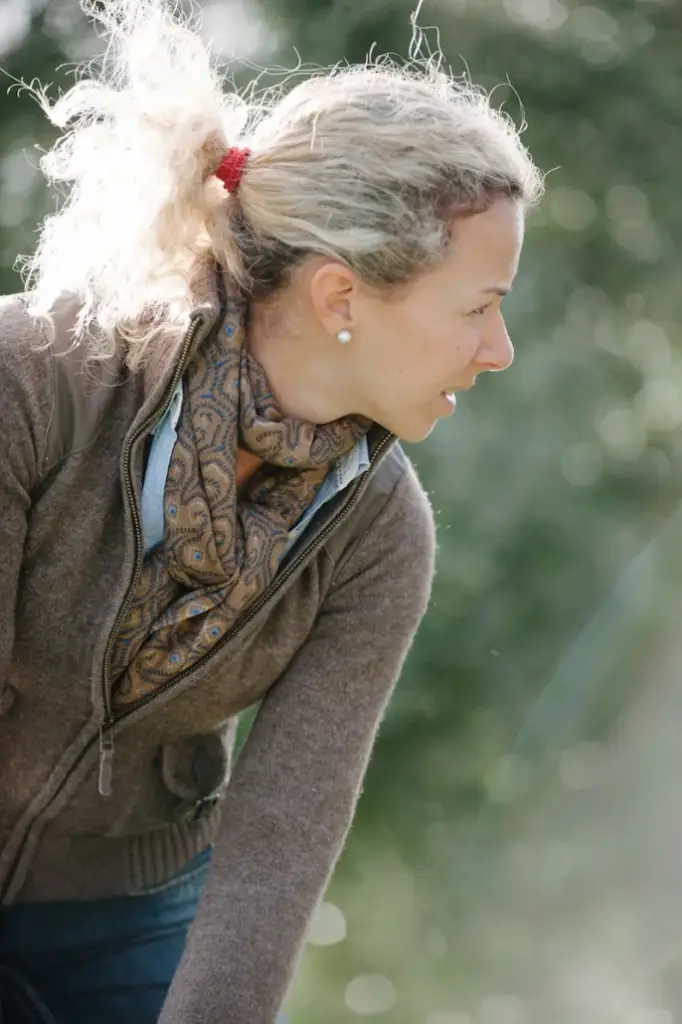
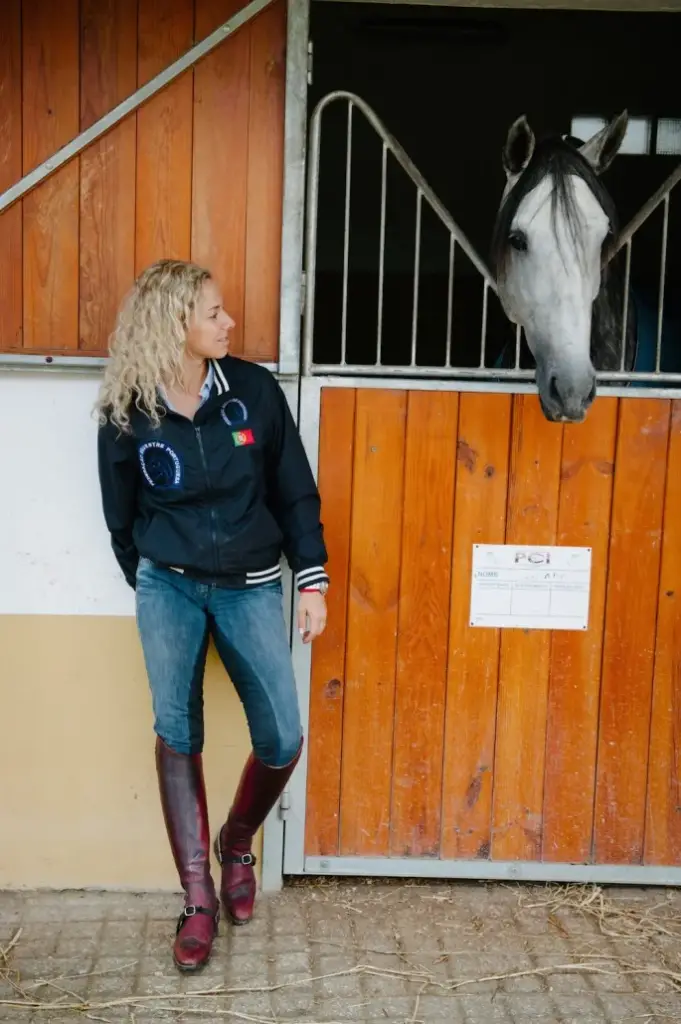
Maria is petite, pretty, intelligent and an extremely capable she rides Grand Prix dressage internationally and is not afraid to gallop across rolling hills rounding cattle.
Maria you are doing just great in dressage competing Internationally and you were in the World Equestrian Games this year. We would love to know more about your life, your dreams and what it is like being trained by your famous dad.
What age did you start riding?
I don’t remember the first time I sat on a horse. Since my first year I had been on a horse’s back with my dad. But I do remember that the first time I rode a horse by myself in the Golegã fair was at the age of 5.
I started competing when I was 13 in small dressage competitions and the Portuguese traditional equitation competitions. But it was in the Working Equitation that I started the serous competition, I was 14 years old.
Do you have any funny stories of your early days riding? Did you and your brother get on or did you compete with each other?
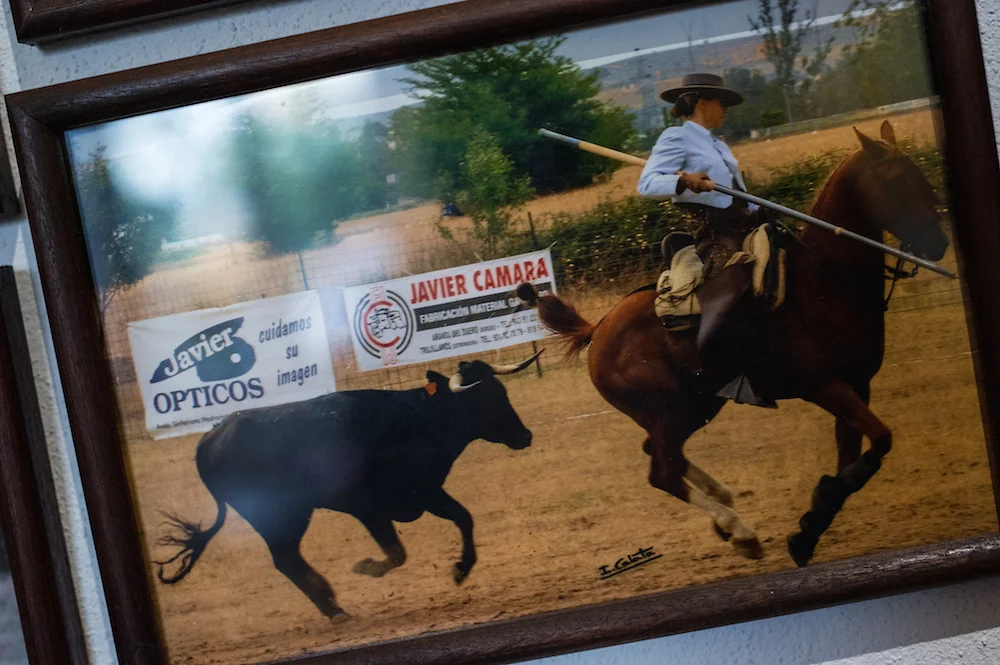
I always had a big passion for bullfighting and riding out in the fields with cows. So, since I was very young (10 or 11) I used to bullfight small cows with my brother in the fields. I always did it and still do it just for fun. In 1999 when I was 13 years old I did perform 2 real public bullfights.
However, despite my public presentation, it was never in my mind to be a professional bullfighter. I always wanted to follow a sport career.
You did very well in your younger years but you then competed on a warmblood how was that for you? Would you like to ride warmbloods now?
I started in the serious dressage competition as Junior. It was when I was in the young riders level that I started my steps into International competition. I chose to compete on warm bloods at that level because, at the time, they were more competitive in movements required for Prix St Georges. So, I competed as YR on White Cedar, a Hannoverian, and we achieved 2 gold medals in the National Championships and we competed 3 times in the European Championships. Then I needed a schoolmaster to help me to get in the Grand Prix and we bought Diamant, a big warmblood from Kasselman stables. He was a great schoolmaster for GP and gave me a gold medal in the Senior National Championships on 2008 and a place on the national team for the European Championships in Windsor 2009.
For me the good horses are the good ones, whatever their breed. However it’s a greater pleasure for me to represent my country on the back of a Lusitano.
What makes the lusitanos special for you?
What makes the Lusitanos special is the willingness to work and to please the rider. A Lusitano is always trying to understand and help their rider, giving all of him or even more if he can.
You and your father have quite a dynamic relationship how do you like working together?
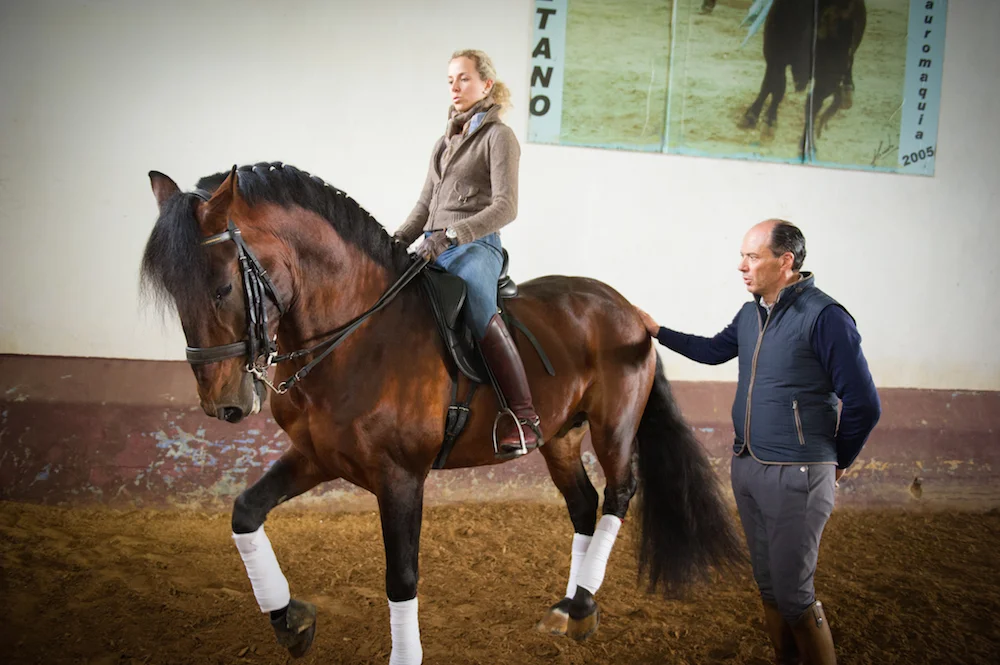
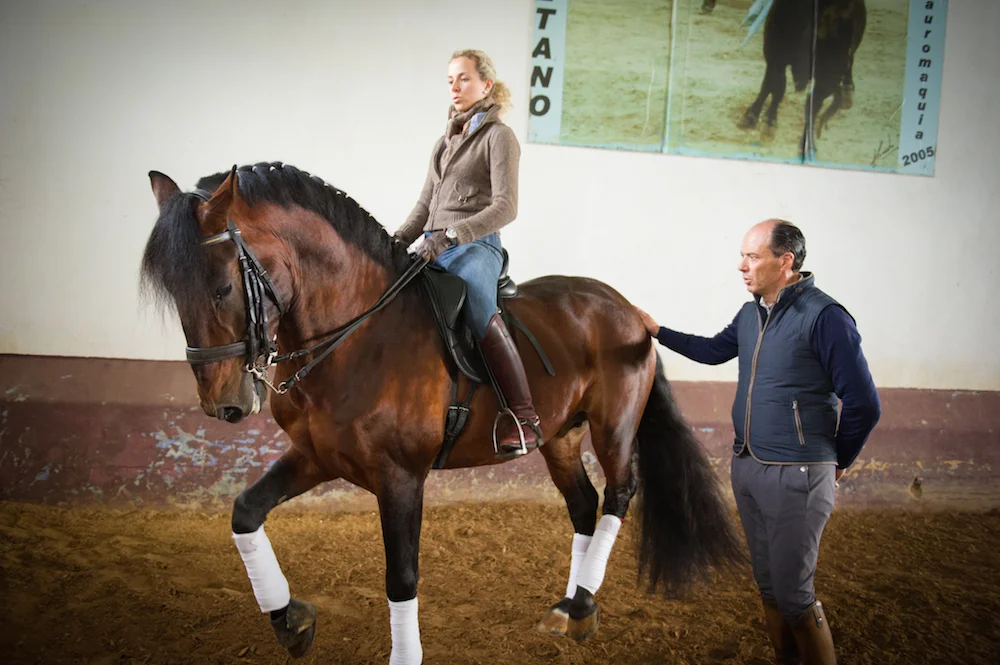
It’s a big pleasure, a lucky situation, to have my father as a trainer. We work every day together, which is a big advantage. Our relationship is spectacular. He can be strict, but we know that at the end of the day we are father and daughter! I’m so lucky to have a master like him at home!
Is all your training with Paulo or do you have others trainers also? Attend clinics etc?
I have had the opportunity to learn from great masters. I spent some of my summer and Christmas holidays in Germany, training with Lisa Wilcox and then with Dolf Keller. I also use to attend to clinics with Kyra Kyrklund and her husband Richard White, Jan Bemelmans and Francisco Cancela de Abreu.
I have seen you and Paulo ride the same horse and I notice differences as would be with any two riders of course but i feel to get on a horse after Paulo has been riding must be quite a feel as he rides very much more classically and has the bull fighting roots. The horses seem very positively dynamic after him I would like to hear you thoughts and comments on the differences for you.
In fact we have the habit of sharing the horses’ daily work with each other. I find that it is very positive that we both ride the same horse since we can share feelings and opinions and then, we can direct the work in a best way. Of course my father has much more experience than me in training horses up to GP. So, he uses his skills, focus and his method in teaching the horses new exercises and I usually focus my method and skills on preparing them for the competitions.
Your riding has come from classical principles too how do you find the cross over into modern competition what are the key differences for you if any?
The classical equitation is, for me, the right basis for the sport. Also I always have present in my mind the FEI training scale, I think these are the main tool structure for the horse and the rider combined with classical principles they can bring you and your horse to competition. Nowadays Dressage has developed a lot and the marks increased exponentially, in my opinion we are beginning a golden times of good equitation and I think that riders are coming more and more to the classical principles.

What was it like for you to ride out into the arena at the World Equestrian Games?
It was a big pleasure for me to represent my country with a Lusitano at the WEG! I had been before in 3 European Championships as Senior, but in the previous WEG (2010), my horse Util died 5 days before the competition, so I really wanted to be there this year.
Unfortunately, Xiripiti was not totally fit, due to an injury he had after the National Championships, he lost some weeks of training before the WEG. Anyway, he did a very clear test, no mistakes, but without his usual strength in the extensions and half passes.
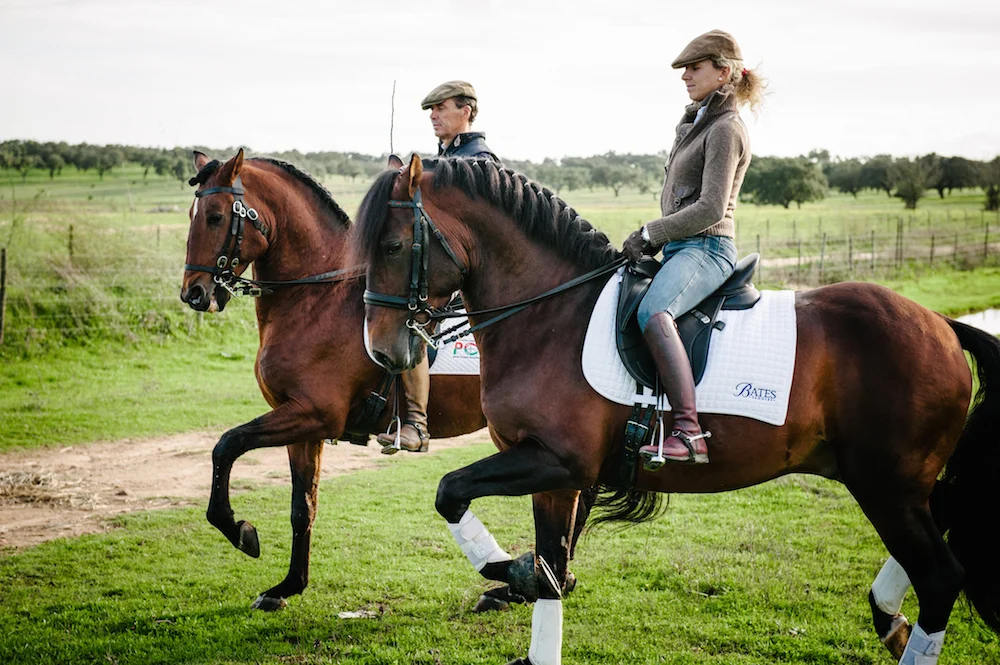
Maria, I guess your next goal is the Olympics and we would truly love to see you competing in them tell us a little about your ambitions we are very interested to know.
I prefer to be focused on the short term, since with horses you have to live day by day, developing your methods and your horse in the daily work and then the results in competition will appear. Anyway, of course that I have some goals in my sportive life, and one of them is the Olympics. Next year I will be focused on the European Championships that will take place in Aachen. A place for a long time now I’ve been dreaming to compete there. Then we will try to be in the Olympics. It’s a tough job to get a place in the Olympics as individual rider, so the first goal will be that the Portuguese team get placed into the 6 first team in the Europeans 2015 and consequently get the qualification, as a team, to the Olympics. I think that it is possible since we have a great group of horses and riders to compete next year in GP level. If it doesn’t happen, then I have to try to get a place as individual.
You told me that you are now very much involved in the horse breeding aspect of your farm how are you making your breeding decisions these days as I believe you are still producing Lusitanos for bull fighting and for dressage competition. How many mares do you have and do you use your own stallions?
We have 15 Lusitano mares we breed for dressage and for bullfight for a long time. I use to say, “when a horse is good is good for everything”. Of course it is not strictly like this but, we always try to find horses with strong backs and legs, with flexibility and “self-carry” and good mind, being always willing to work with the rider. These are essential characteristics for bullfighting and for dressage. Then, we try to use stallions with curriculum in dressage and in bullfighting.
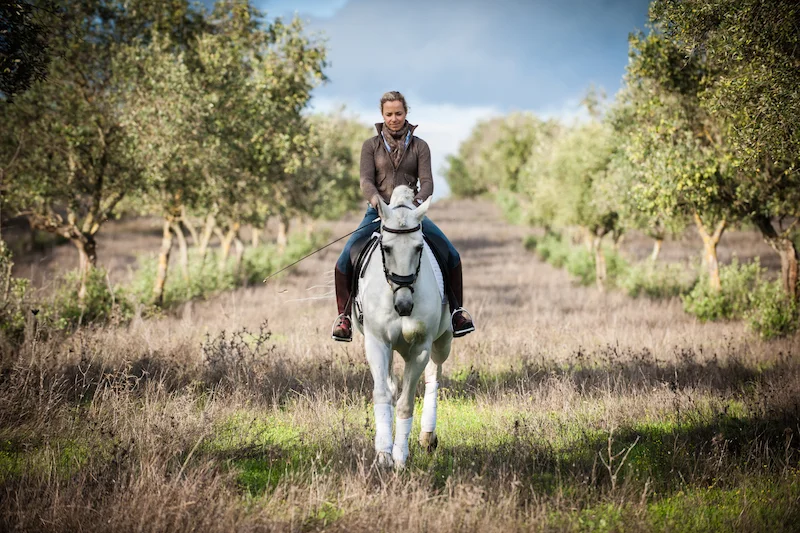
You are not just a dressage rider but a very fun adventurous rider that is not afraid to have some real fun galloping across the Alentejo hills rounding up cattle, and taking part in many Portuguese traditions wearing traditional clothing it is lovely to see this make you very cool in our eyes tell us a little about this side of your life.
I always loved to ride out in the countryside and to work with the cattle. I like to participate, as a hobby, in Acoso y Derribo competitions with my husband. It is a Spanish tradition where two riders have to lead a cow and catch it in the open field. It is really fun and it gives you a lot of adrenaline. We have to have very well trained horses to do it. I can’t imagine having a hobby without horses.

I want to thank you Paulo and Maria for your openness in revealing parts of your world, I think you have achieved remarkable things and are a truly inspirational family to know. Many top riders in Portugal are from classical schools of equitation such as The Portuguese School of Arte but very few have bull fighting as their training. What ever ones opinion is about bull fighting – it is an art of great precision and an outstanding horse/rider relationship it is also amazing to hear how a horse can compete PSG one day and bull fight the next. I very much look forward to following your future developments.
Thank you both x
By Teresa Burton Images by Lena Saugen Photography